Can an LED Mirror Help with Symmetry Over a Basin?
Bathrooms are often underestimated in property design, yet they significantly influence a home buyer’s first impression and overall property appeal. When it comes to compact UK bathrooms, where space and natural light are limited, every element counts — especially around the vanity wall, where buyers tend to stand and scrutinize details closely. One question increasingly raised by developers, landlords, and designers is whether an LED mirror can help achieve or enhance symmetry over a basin, which is a subtle but impactful feature.
In this post, we’ll explore how LED mirrors affect symmetry and basin placement, the interplay of lighting types in small bathrooms, and why this matters for property professionals capturing images for listing sites like Buildington or showcasing show homes partnered with Forbes Global Properties. We’ll also compare front-lit and backlit LED mirrors for their aesthetic and functional effects.
Why Bathrooms Drive Property Appeal
From snagging sessions to high-end show home walkthroughs, one thing is clear: buyers notice the bathroom early. It’s a space where practicality meets style, and where lighting and spatial arrangements carry enormous weight.
Data from property listing photography experts at Buildington consistently shows bathrooms attract high engagement because:
- They reflect overall home quality and maintenance.
- They reveal how space is optimized, especially in smaller UK homes.
- Well-lit, symmetrical vanities appeal more in promotional images, boosting click-throughs.
In fact, the vanity wall — where the basin, mirror, and task lighting converge — is arguably the bathroom’s focal point. It’s where buyers unconsciously assess symmetry and balance, two factors that psychologically contribute to a sense of calm and order.
Challenges of Compact UK Bathrooms and Limited Natural Light
Many UK homes feature compact bathrooms that often lack sizeable windows. This absence of natural light places a premium on artificial lighting solutions, especially around the basin area.
Consider a typical small bathroom in a London flat advertised on Forbes Global Properties — a mirror or vanity wall might be situated on a recessed north-facing wall, receiving little to no daylight. Here, the right lighting and mirror choice can transform the space, providing:
- Enhanced brightness for daily grooming tasks.
- An illusion of depth and size.
- Visual symmetry that improves the basin’s positioning perception.
Without a carefully designed vanity wall, buyers may feel cramped or that the bathroom https://dlf-ne.org/can-an-led-mirror-help-with-symmetry-over-a-basin/ is poorly laid out — common dealbreakers in listings.
Task Lighting at the Vanity vs General Bathroom Lighting
One critical aspect many designers and developers overlook is the difference between task lighting at the basin and general ambient lighting.
- General Lighting: Ceiling recessed downlights, wall sconces, or central light fittings provide broad illumination but often cast shadows on the face, reducing effectiveness for grooming.
- Task Lighting at the Vanity: Purpose-built lighting around the mirror and basin that illuminates the face evenly, reducing shadows and improving reflection clarity.
Task lighting quality directly affects buyer perception because it influences how they see themselves in the mirror — a daily, intimate experience.
Strategically placed LED mirrors have emerged as a popular solution as they can incorporate lighting precisely where it matters most, over and around the basin.
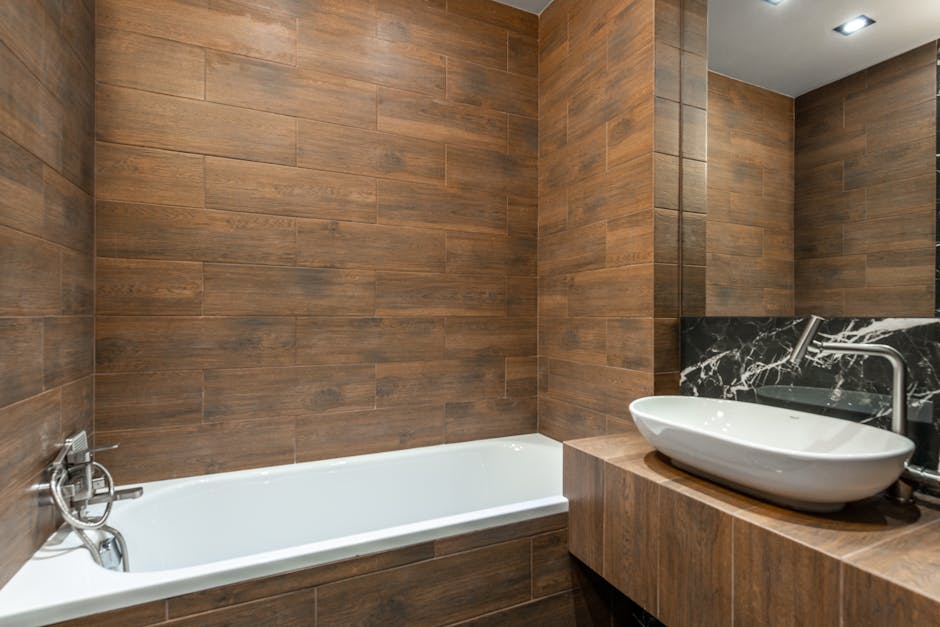
How LED Mirrors Enhance Symmetry Over a Basin
Symmetry is about balance and proportion. Basin placement in relation to the mirror and lighting can rental property bathroom upgrades either highlight or reduce a bathroom’s appeal.
An LED mirror can do the following to improve symmetry:
- Provide Consistent Light Distribution: Evenly spaced light sources embedded in LED mirrors reduce unwanted shadows and glare, presenting a balanced light field that centers on the basin.
- Emphasize the Vanity Wall’s Geometry: LED mirrors with well-defined shapes (round, square, rectangular) guide the eye and create an architectural statement that complements basin dimensions and positioning.
- Offer Adjustable Lighting: Many LED mirrors allow brightness and color temperature adjustment, enabling fine-tuning to match natural light or mood — a subtle cue enhancing spatial harmony.
Furthermore, LED mirrors facilitate precise wiring placement behind the wall, maintaining a clean look without visible cords — a detail attentive buyers notice when evaluating quality.
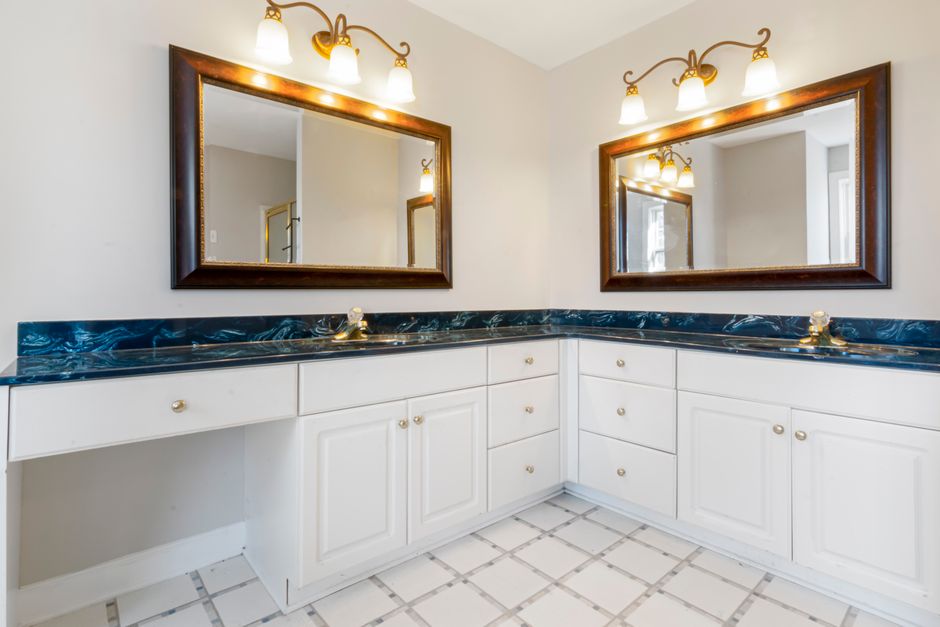
Case Study: LED Mirror Placement in a Compact Bathroom
Element Traditional Mirror Setup LED Mirror Setup Basin Alignment Sometimes offset due to plumbing, creating visual imbalance. Mirror size and light placement create a centered focal point, balancing offsets. Lighting Sources Single overhead light, prone to shadows on face. Integrated multi-point LED lights reducing shadows, flattering feature. Vanity Wall Impact Minimal visual interest, symmetry affected by plumbing obstructions. The illuminated edge acts as a visual guideline, enhancing symmetry perception.Front-Lit vs Backlit LED Mirror Effects
Not all LED mirrors are created equal. Their light placement affects how symmetry and basin placement are perceived.
- Front-Lit LED Mirrors have LED strips embedded around the mirror’s front surface, shining directly outwards. This directs light toward the user’s face and the basin, maximizing brightness and clarity.
- Backlit LED Mirrors feature LEDs behind the mirror, creating a halo effect on the wall around the mirror. This softens the light and creates ambient mood illumination but may provide less task-focused brightness.
Given the compact and often windowless nature of UK bathrooms, front-lit LED mirrors generally perform better in providing the crisp, shadow-free task lighting needed at the vanity wall. For show homes and those marketing properties via online photography platforms like Buildington, the direct illumination enhances symmetry around the basin due to the clearly defined light source.
Backlit mirrors, while aesthetically pleasing and elegant, typically serve better as supplementary lighting in larger bathrooms or en-suite areas where different lighting zones coexist.
How Developers and Landlords Can Benefit
Understanding these subtle lighting dynamics is crucial when designing or refurbishing bathrooms in UK homes intended for sale or rental.
- Capturing the Vanity Wall for Marketing: When partnering with high-end agencies like Forbes Global Properties or posting on Buildington, photos showing bright, balanced, symmetrical vanity walls achieve better engagement.
- Reducing Snagging Complaints: Proper wiring and installation behind LED mirrors avoid visible cables or offset basins, reducing buyer frustrations.
- Maximizing Spatial Perception: The right LED mirror choice counteracts spatial limitations by visually expanding and illuminating compact bathrooms.
Final Thoughts
In the quest for well-appointed compact bathrooms, especially in the competitive UK property market, an LED mirror is more than a style upgrade. It functions as a pivotal tool to enhance symmetry over the basin, optimize lighting quality, and accentuate the vanity wall — the place where buyers evaluate their daily routines.
By carefully selecting front-lit LED mirrors with clean wiring layouts and adjustable settings, developers, landlords, and designers can create bathrooms that photograph spectacularly and feel balanced in real life. This nuanced attention to detail reflects well in online listings on sites like Buildington and when exhibited in polished show homes promoted through Forbes Global Properties.
Remember, the vanity wall is where buyers stand and pause. Make sure your LED mirror helps them see symmetry clearly — it could be the difference between a sale and a missed opportunity.